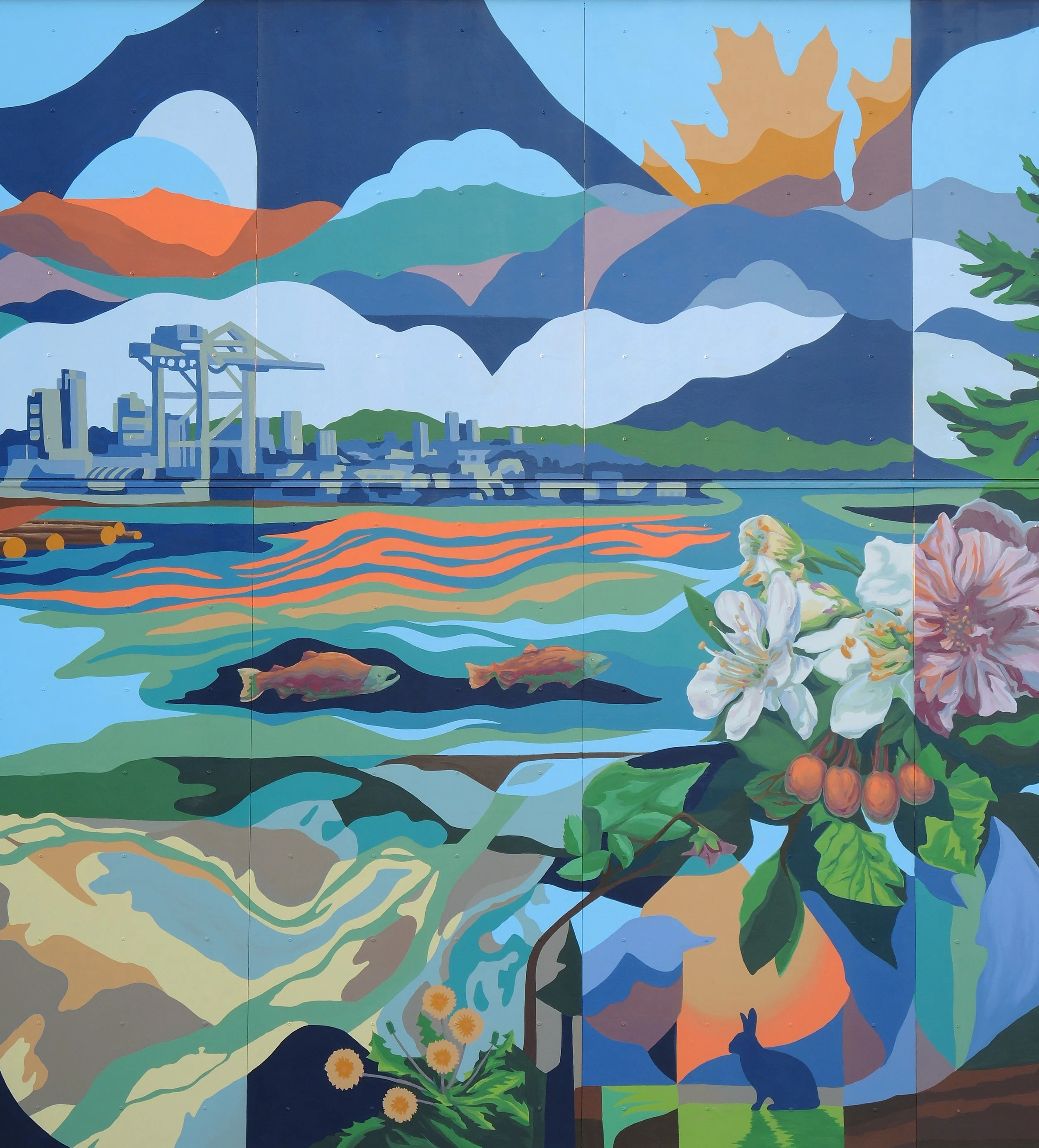
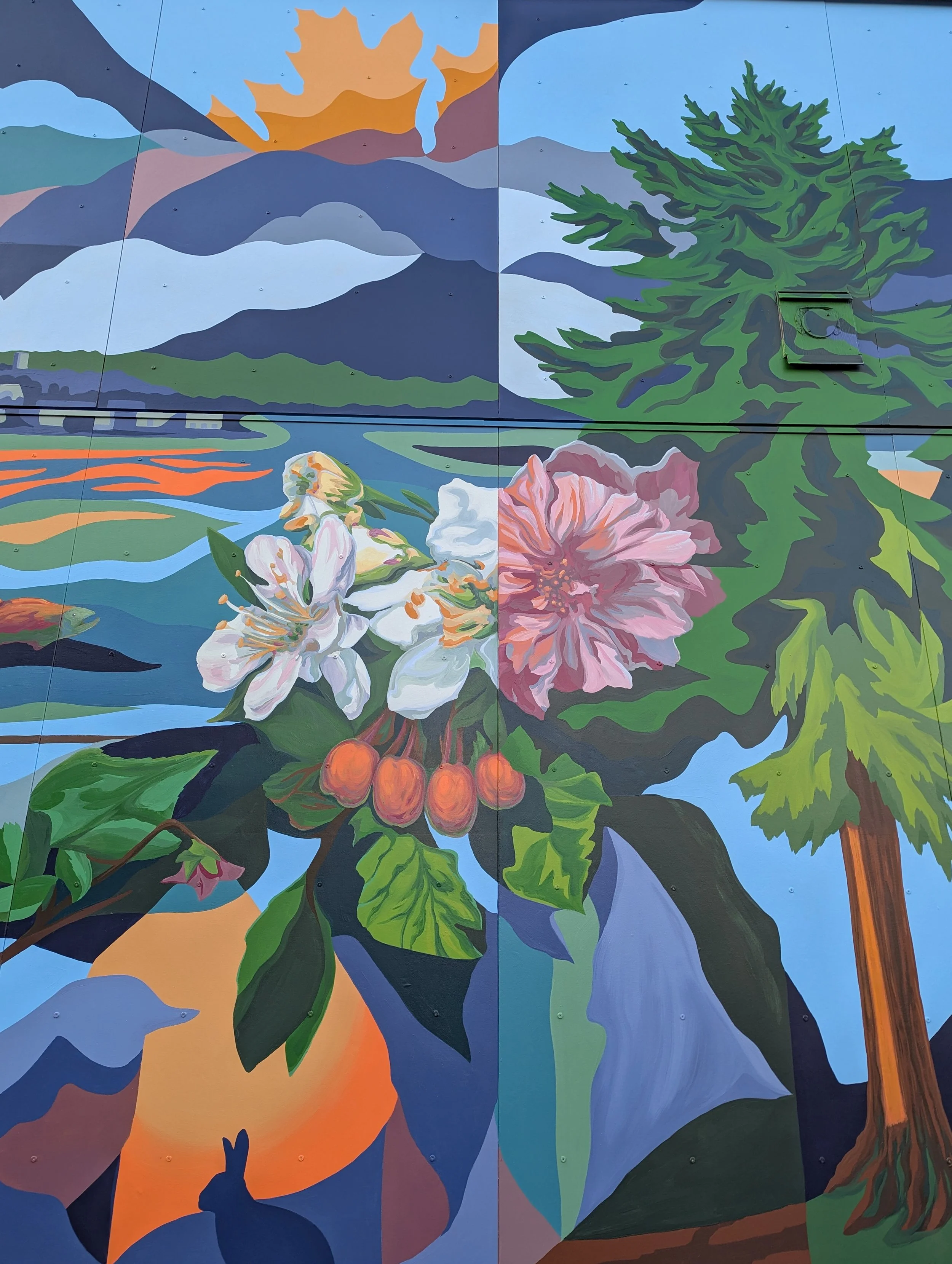
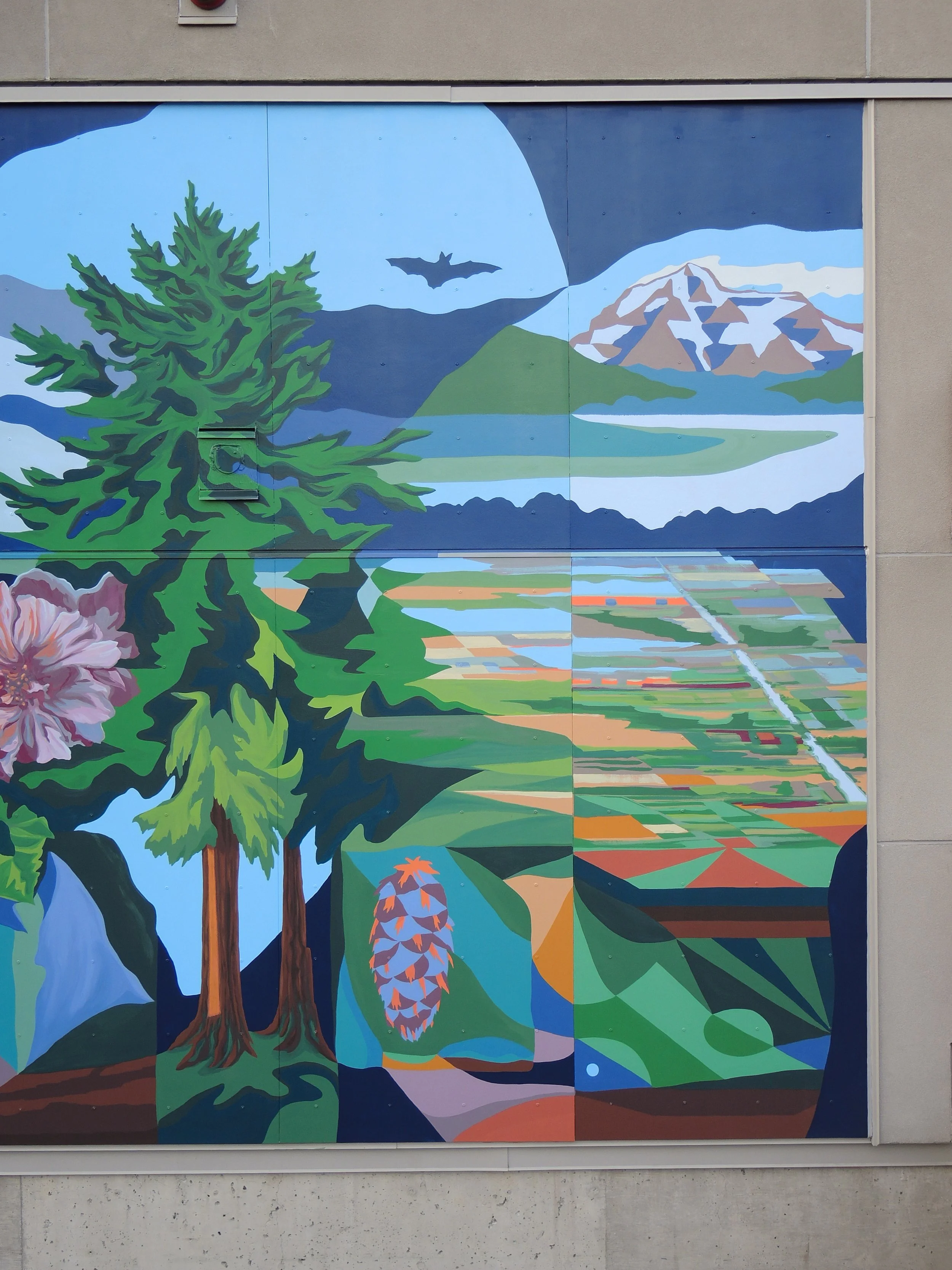
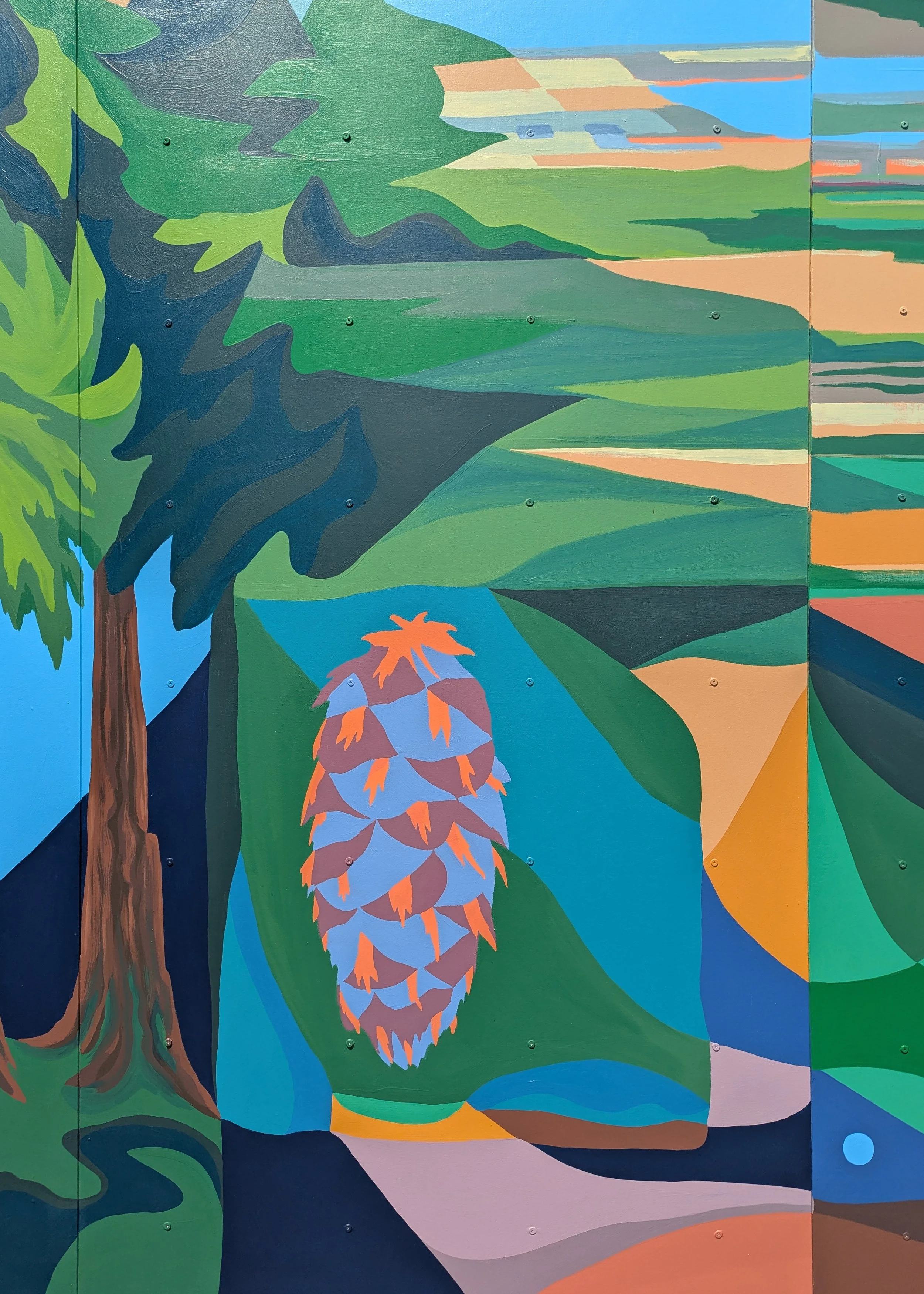
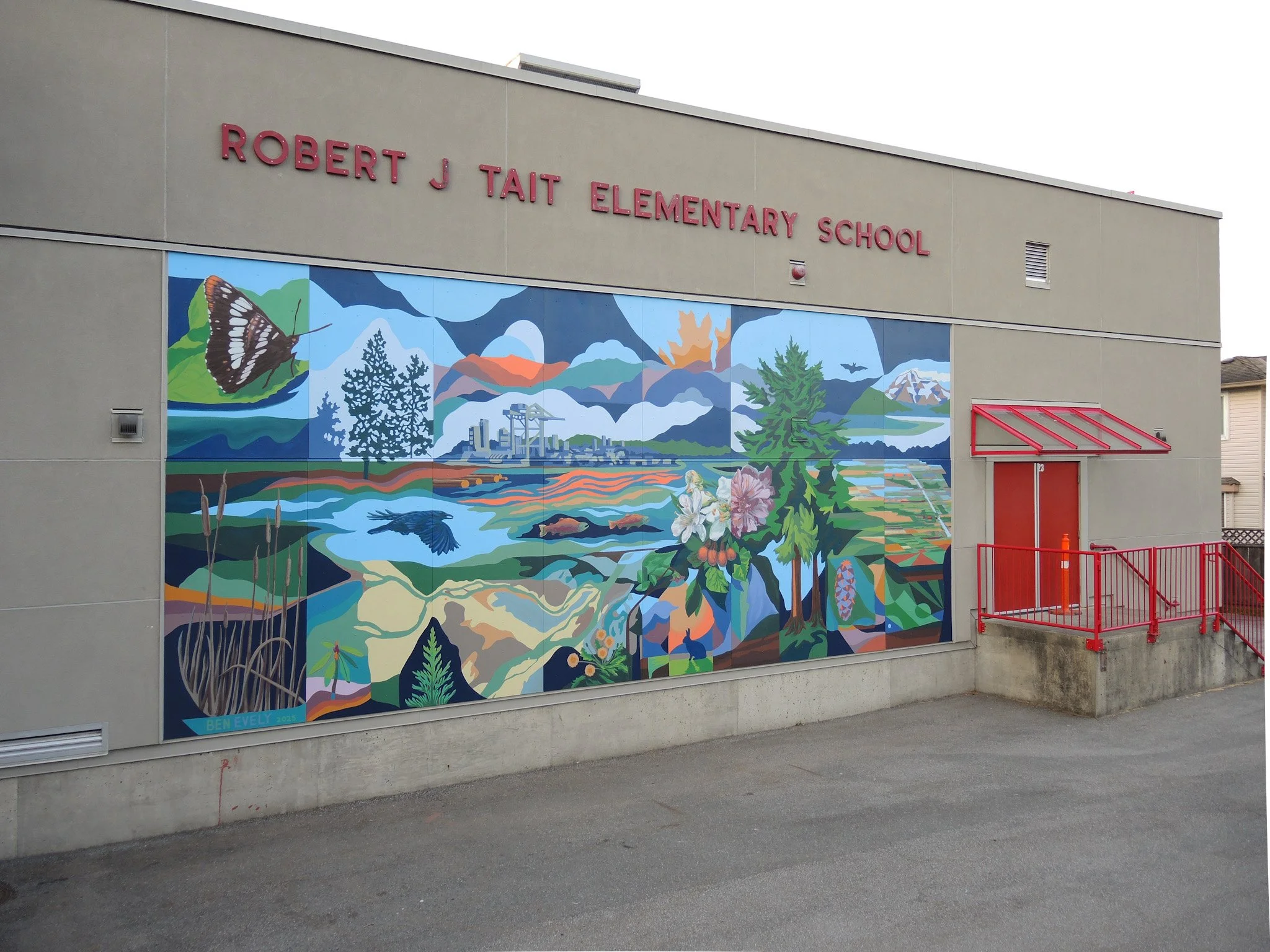
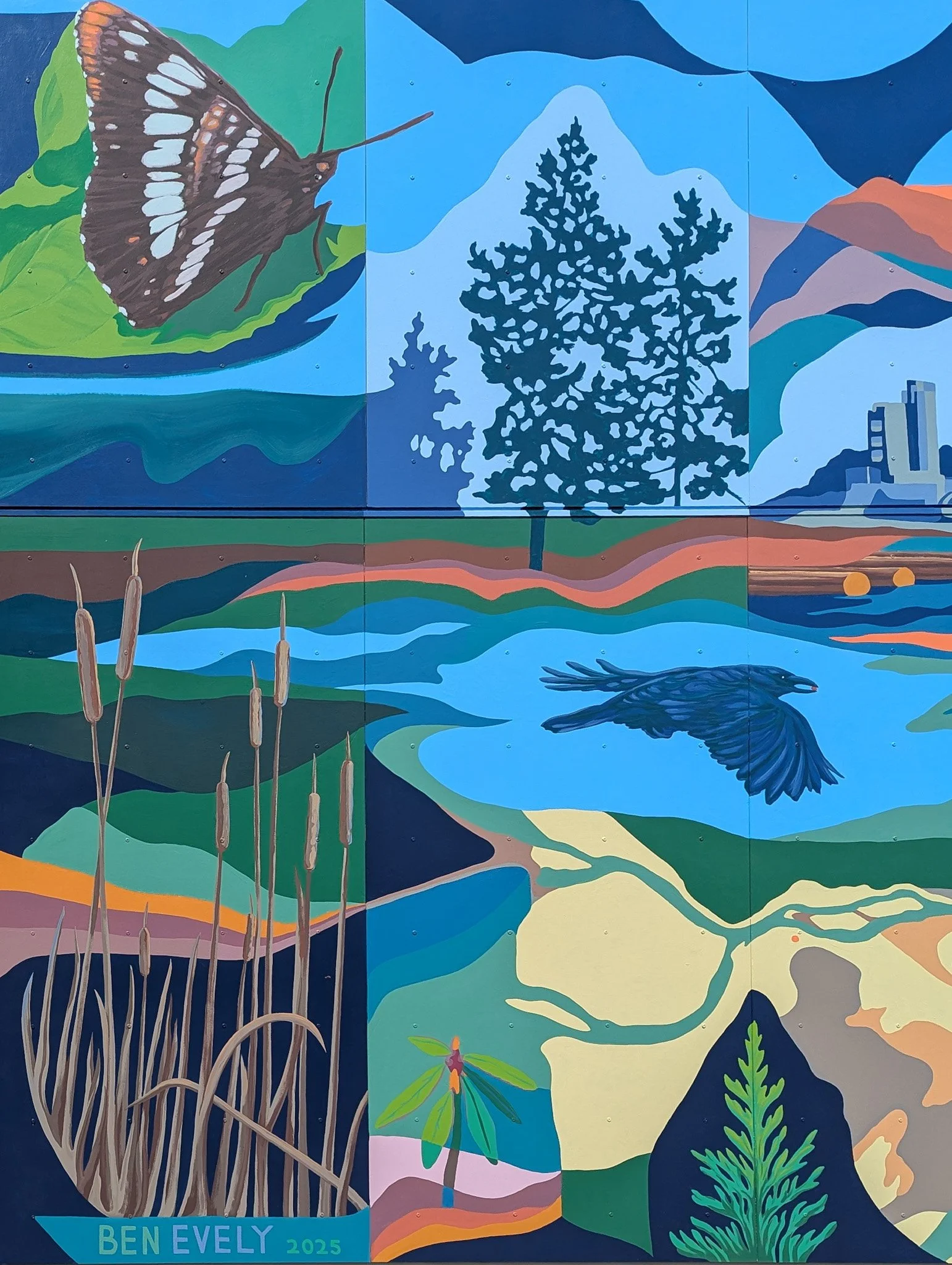
Life Layers showcases a spectrum of the nature immediately surrounding R.J. Tait Elementary, as well as zoomed out perspectives of the community's integration into expansive natural systems. The mural iconography emerged directly from engagement with students and staff. The composition includes many of the most prevalent ideas which surfaced from this feedback.
The segmented design plays with the architecture of the wall. The design considers ideas around sedimentation and layering, in literal and metaphorical senses. The sediment of the Fraser River forms the local landscape. Cultural and natural histories are layered overtime, shaping the landscape and habitation within it.
Many native species are highlighted, including the Pacific crabapple, northwestern crow, Loquin’s admiral butterfly, Douglas fir, a culturally modified western red cedar, shore pine, sockeye salmon, Townsend’s big eared bat, big-leaf maple, and bog Labrador tea. Also featured by popular demand are dandelions, a cherry blossom, and bunnies. The presence of non-native species points to the complexity and potential tensions within ecological relationships, and co-existence.
A geological representation of the local area is pictured in the lower left section of the mural. This illustrates how the flow of the river shapes the landscape. From this sedimentary map, the river’s flow can be traced up into the top right corner to Yuh-hai-has-kun, or Mt. Robson. This is the starting point of the Fraser River headwaters. A unifying element of the mural is how nature and community are interconnected and on small and large scales.